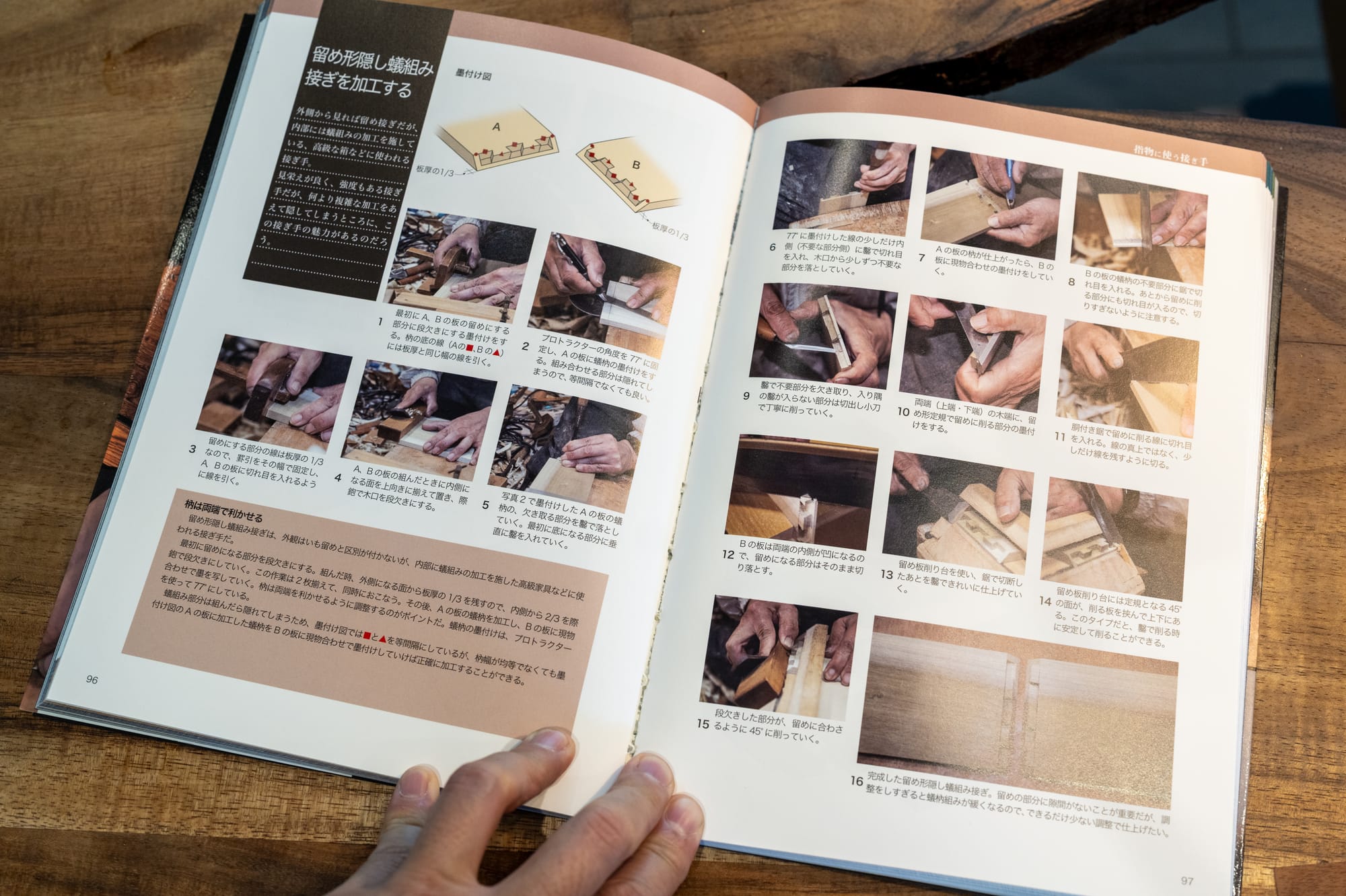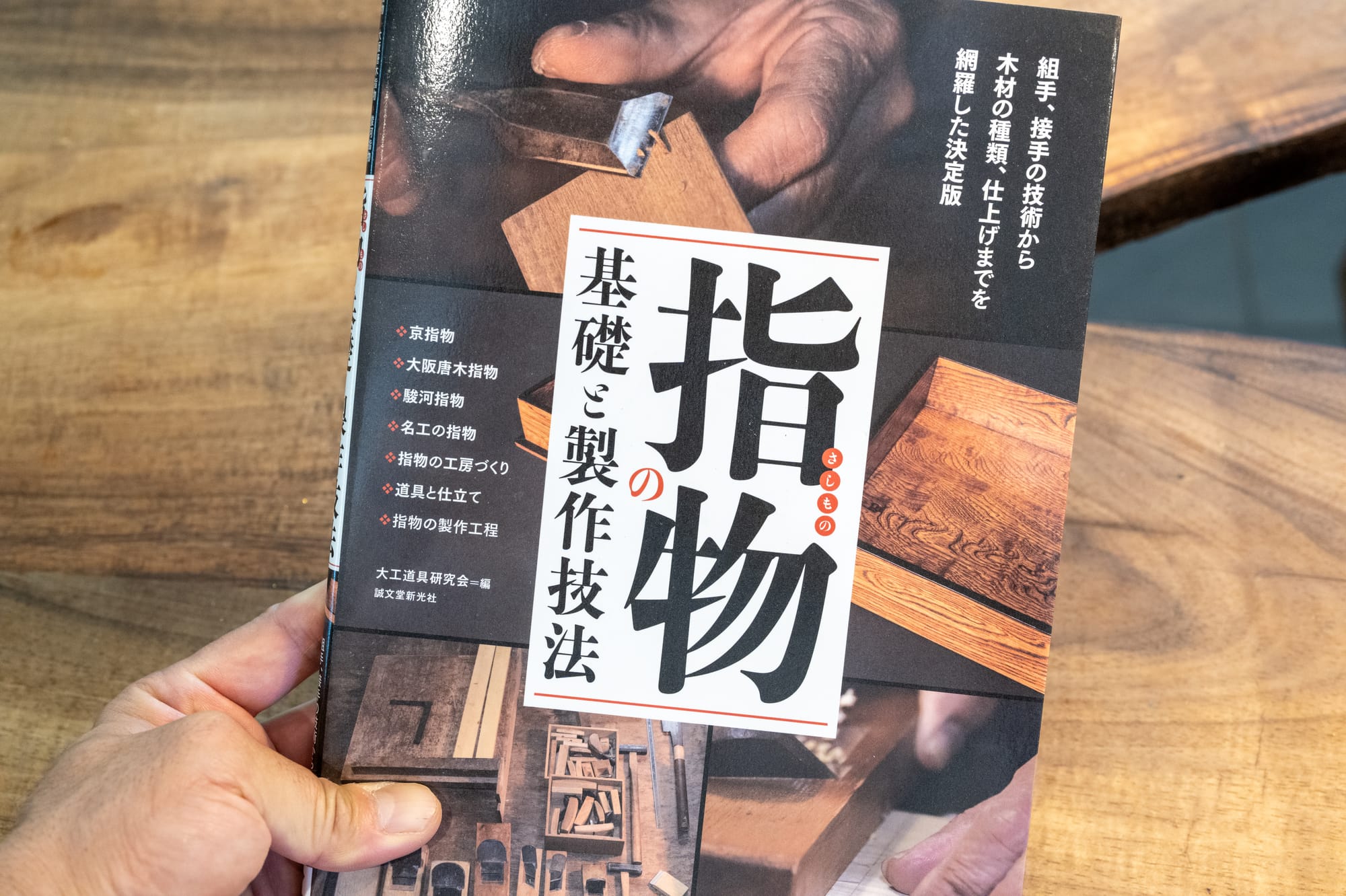
Translating 2 pages on secret mitered dovetail joints from the out-of-print book, "Sashimono Fundamentals and Techniques"
The Splice is a section on Paklan with translations of helpful and interesting excerpts from books, etc, on craft, for paid subscribers.
Felice Forby is a former Japanese translator and beginner woodworker with a degree in Japanese and East Asian Studies. She lived in Japan for over ten years, where she developed a love for the country's craft traditions.
Book Details: 指物の基礎と製作技法
Sashimono no Kiso to Seisakugihou
Sashimono Fundamentals and Techniques
Availability: Seemingly out of print, but can maybe be found here or there. The two-page translation below is better used with the book in hand
By Daiku Dougu Kenkyuukai (translates to “Carpentry Tool Research Group”)
First published in 2019 by Seibundo Shinkosha
Introduction to the Book
This translation comes from the Sashimono no Kiso to Seisakugihou (Sashimono Fundamentals and Techniques) and describes how to make one of the more advanced joints, the secret mitered dovetail. The book introduces the fundamentals of traditional Japanese sashimono, a craft that includes boxes, furniture, trays, and other smaller pieces for the home. You will find detailed how-tos for six joints, ranging from the basic to the more advanced, including the secret mitered dovetail featured here. There are also more than three dozen reference diagrams with short descriptions for joints not covered in detail. Throughout the book, you’ll find plenty of photos of traditional and modern pieces made by master sashimono craftspeople.
Joints of note covered in the book with step-by-step instructions:
- Three-finger box joint (sanmai-gumitsugi) - p. 88
- Half-blind dovetail (tsutsumi-ari-kumitsugi) - p. 92
- Secret mitered dovetail (tomegata kakushi-ari-kumitsugi) - p. 96
- Triple-shouldered blind mortise and tenon (sanpou-douzuki tome-hirahozo tsugi) - p. 102
- Twin tenon (nimai hozo tsugi) - p. 106
- Two-way “sword point” miter mortise and tenon joint (nihou ken-dome hozo tsugi) - p. 110
In addition to the step-by-step how-tos, the book has a great section on setting up a small home workshop (pp. 42-47) and another on the jigs used by professionals (pp. 48-57). The latter explains how to make your own atedai (the traditional low workbench); suridai and koguchi kezuridai (jigs for squaring boards lengthwise and on the end grain); and tome-koguchi kezuridai and tome-ita kezuridai (jigs for mitering). There is also a section on the basic sashimono tools, with tips on sharpening and kanna setup.
One unique aspect of this book is its three detailed, step-by-step demonstrations, each following a professional Japanese woodworker as they work through a specific project: a two-tiered box, a beautiful hexagonal sweets box made by joining two types of wood, and the flattening and lacquering of a rosewood board. Finally, the book includes plans and instructions for an aibiki, a traditional Japanese low stool designed for kneeling comfortably in seiza for long periods.
Chapter Translation: How to make a secret mitered dovetail joint
(Pages 96-98)