Settling back home after Japan has been interesting. First we recovered, repaired and cleaned up. Now, we move forward.
Leaving our apartment required we hire someone to help us take most of our things. Japanese rental units don’t come with appliances. So we sold the appliances we just bought new, for 10th of our original cost, to a family moving to the area.
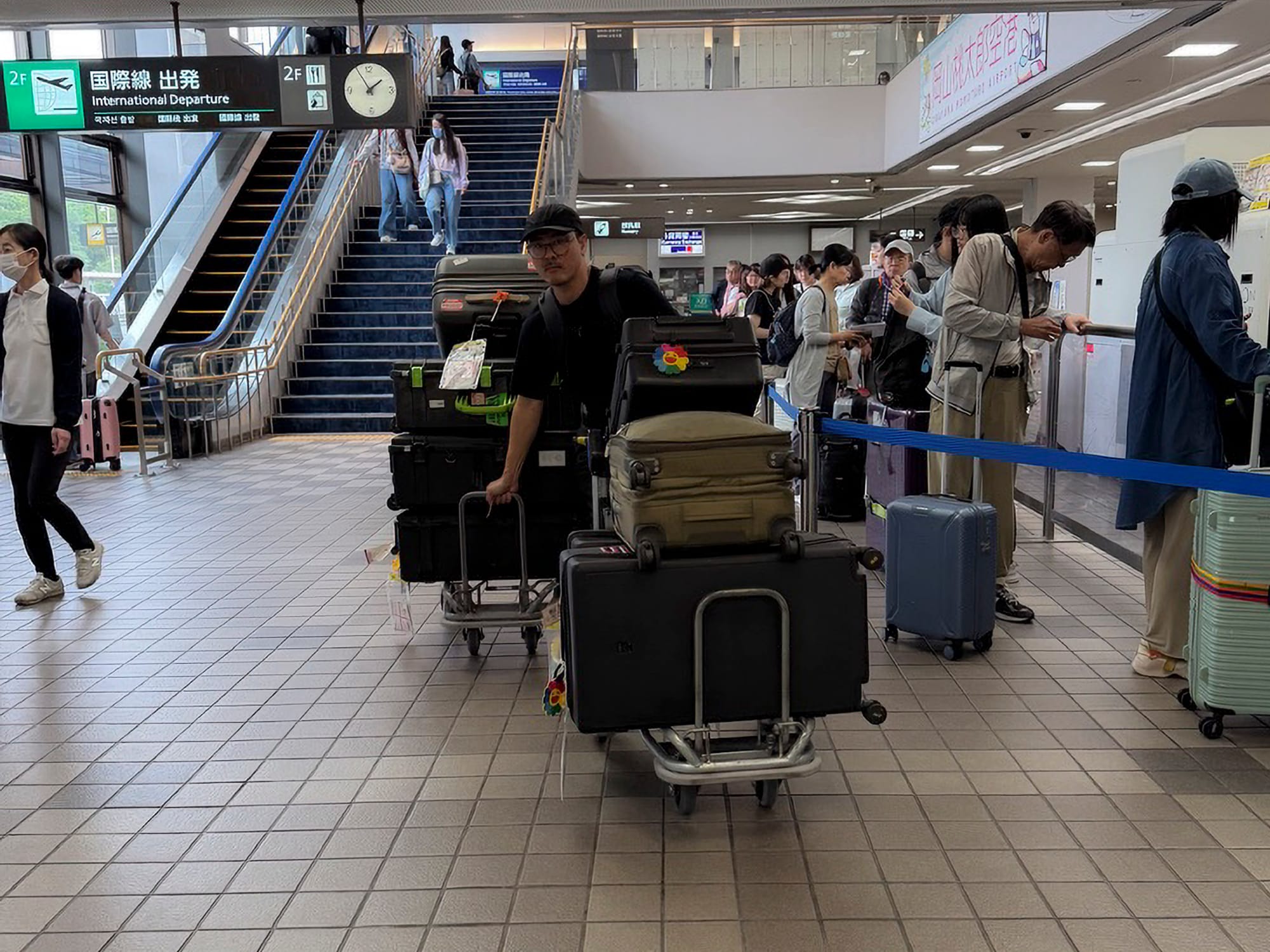
Tools and cameras required special handling. Shipping things from Japan is complicated, involving a lot of itemization and declaration. The choice then was to fly home twice, carrying about 30 pieces of luggage by cart and hand. Tools and cameras made up most of the weight. Clothes were used as padding in most cases. And cameras were mostly carried in overhead bins in small pelican cases.
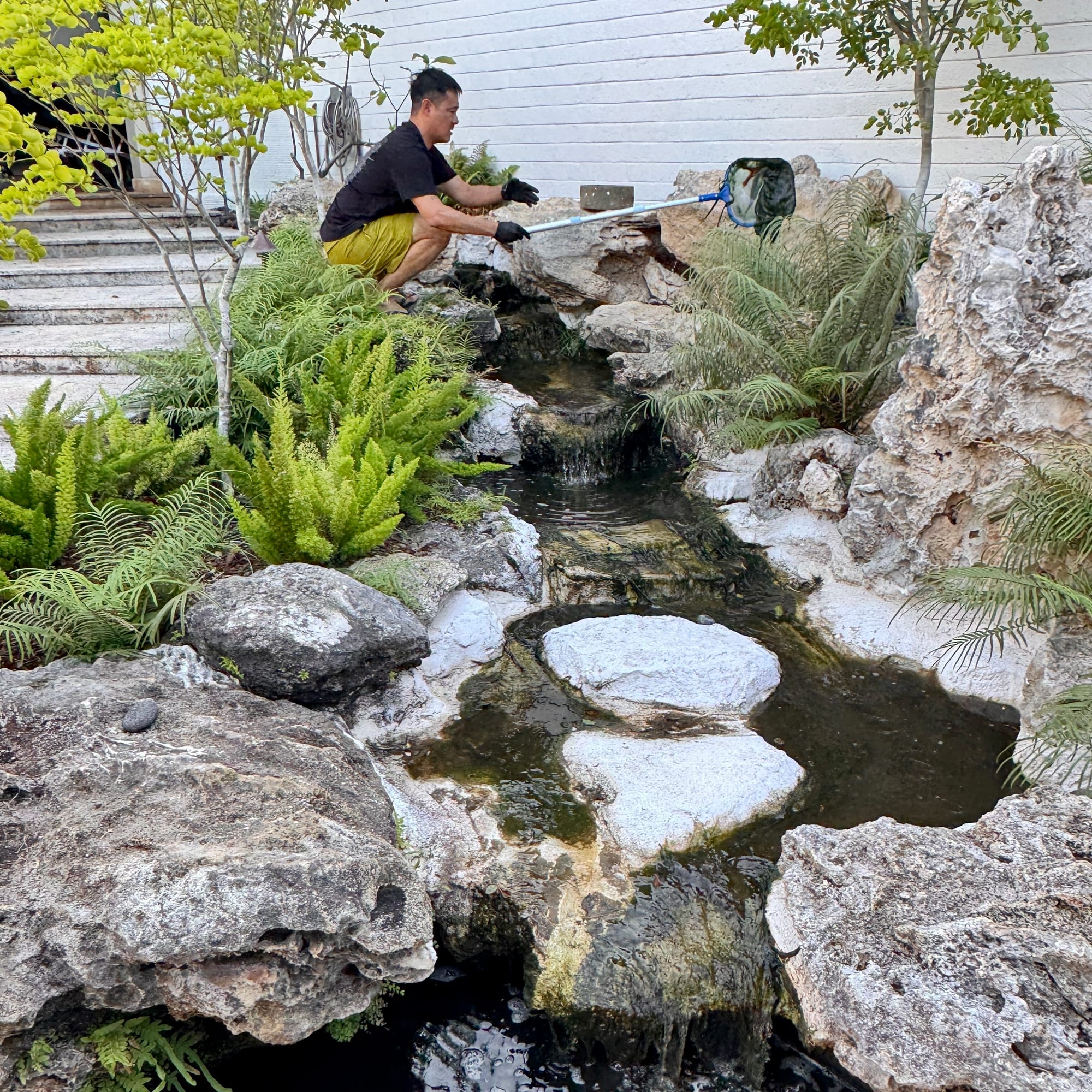
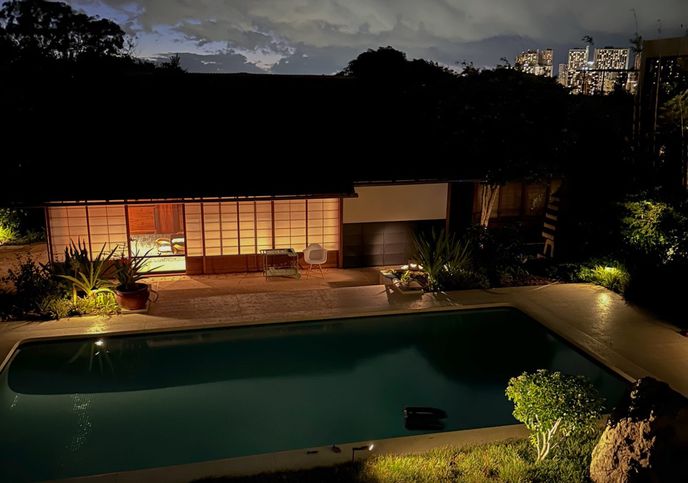
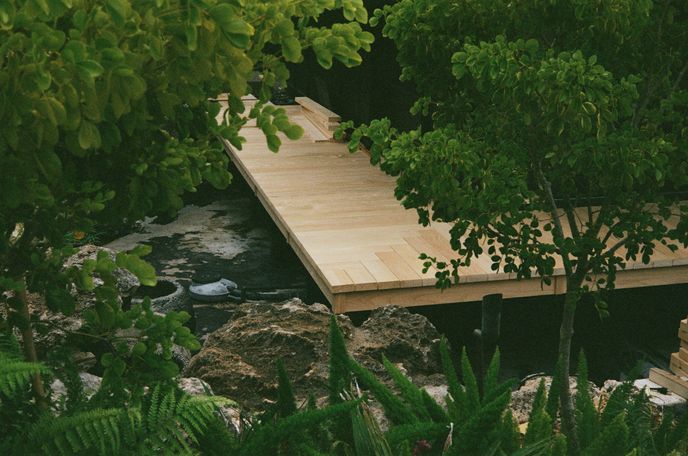
Our home was in disarray. The gardens were overgrown without true oversight. And everything needed maintenance, from doors and windows to electronics to the pool and HVAC infrastructure. The koi pond had grown green with neglect. This isn't the kind of house that can be kept on a maintenance schedule, but requires sensitive eyes and hands to notice what is happening through the changes in season, and to adjust.
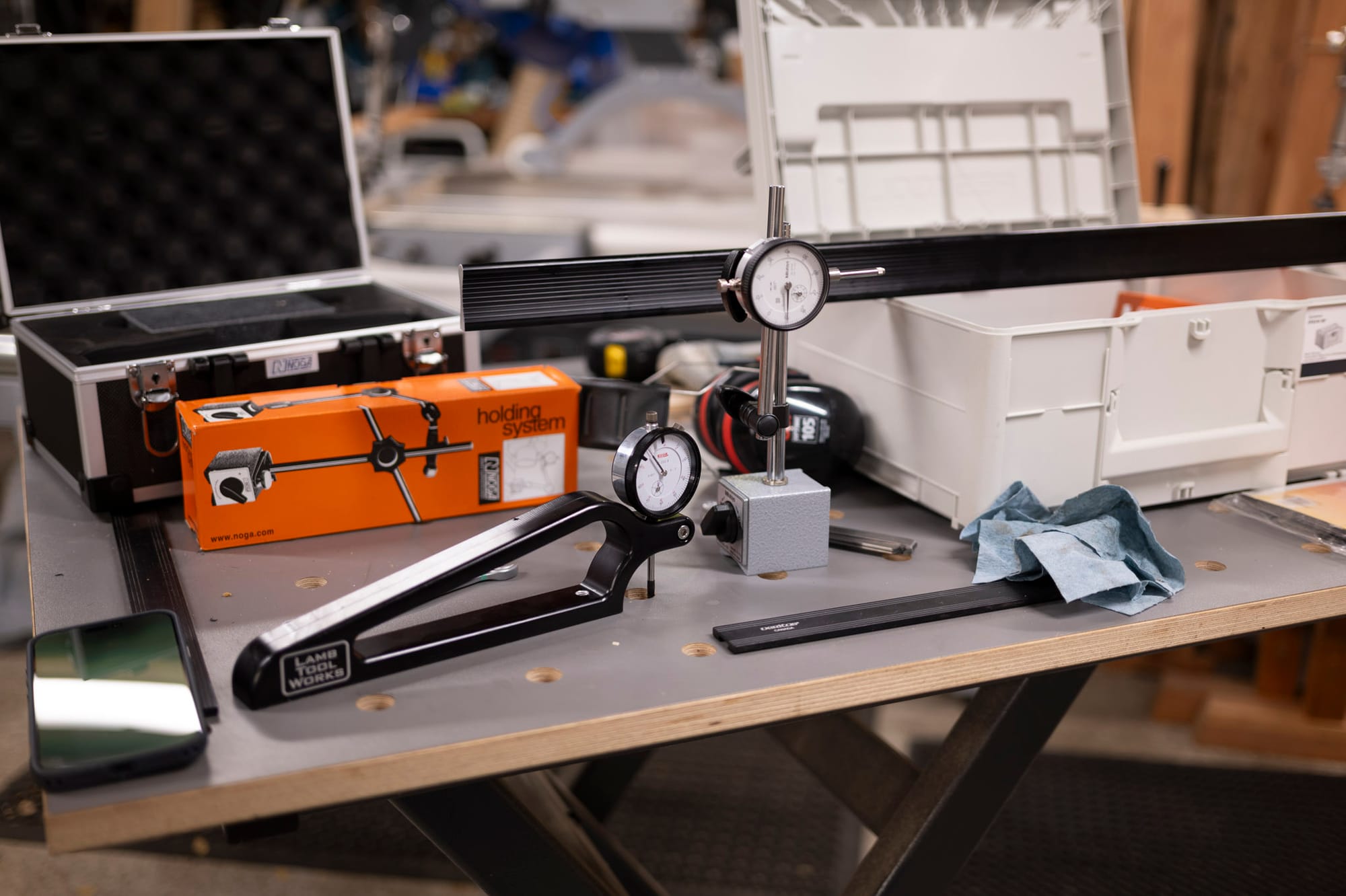
The shop was in even worse shape. Being a mile from the ocean, salt air corrodes all. Every machine got calibrated, waxed and lubricated.
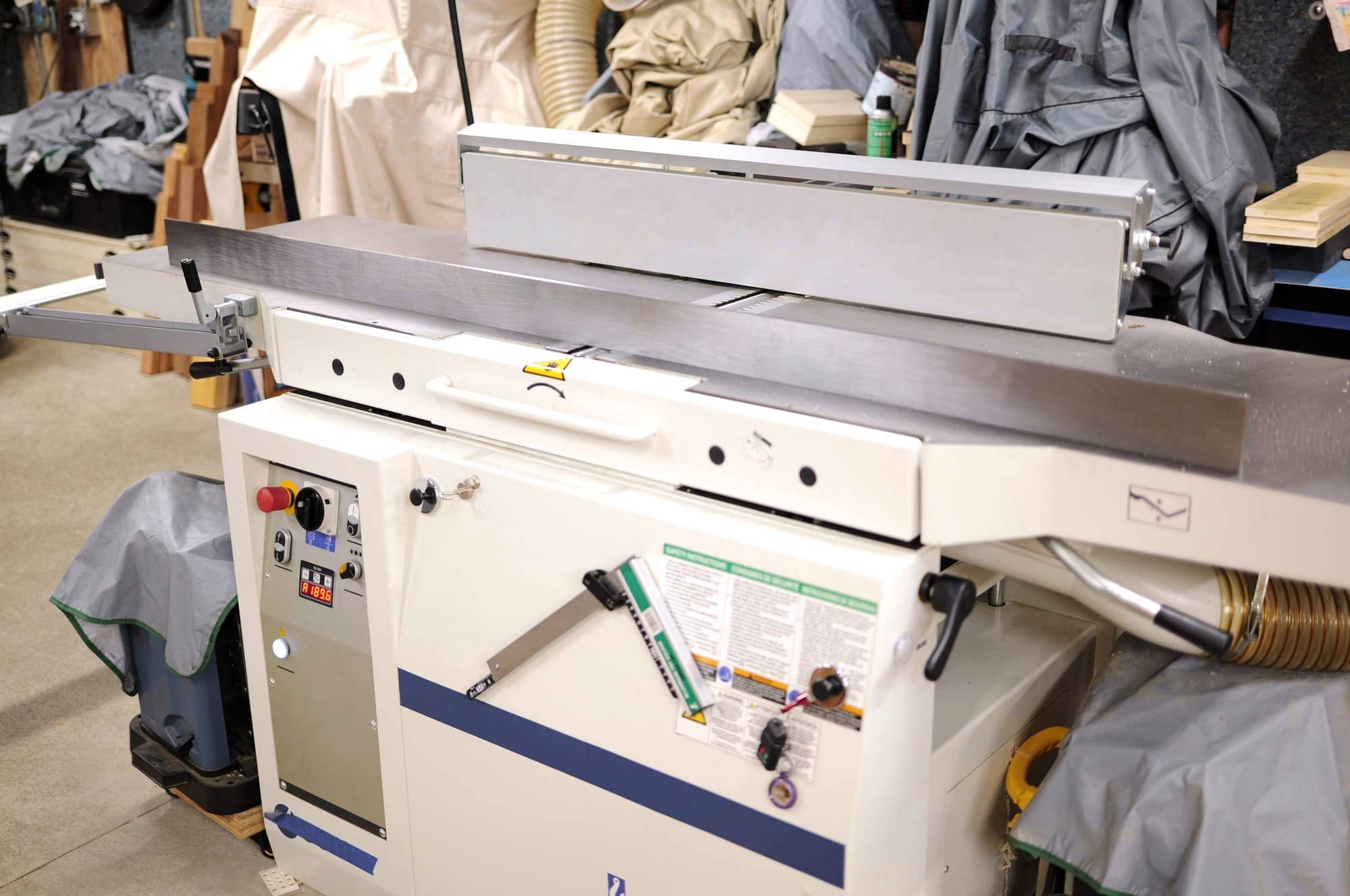
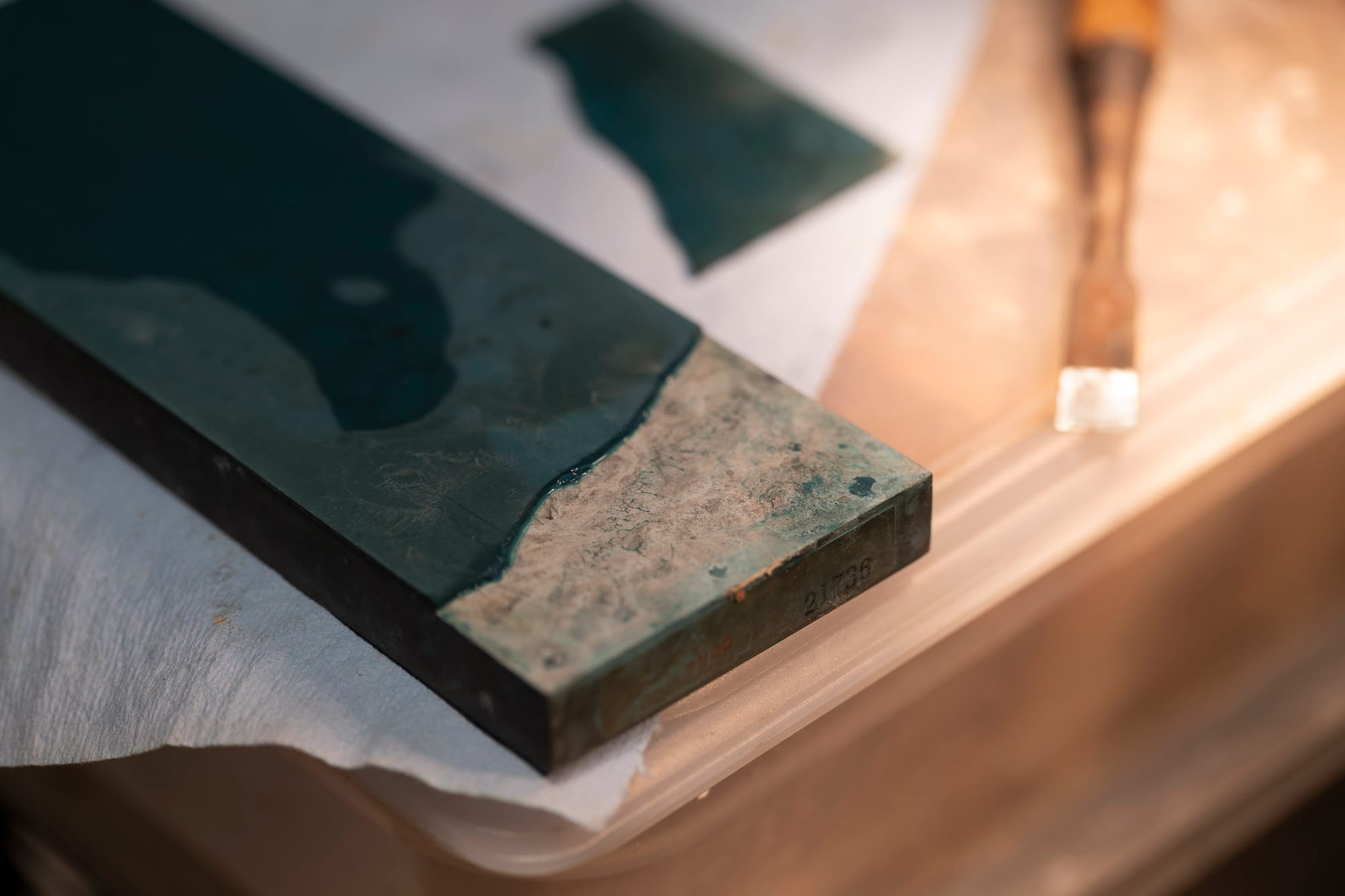
Despite waxing every machine, some spots were missed. Where rust had formed, it was removed and preventative was applied. The jointer was incredibly out of spec, needing a full service. Several prototype diamond resin stones, stored too damp, delaminated.
Powering up a big planer caused some arcing on a main splice into the shop, killing power for a week until the electric company could send out a lineman to shut down the transformer on the street. Neither the electrician or lineman would touch the splice, so it was up to me to pray as the wrench turned.
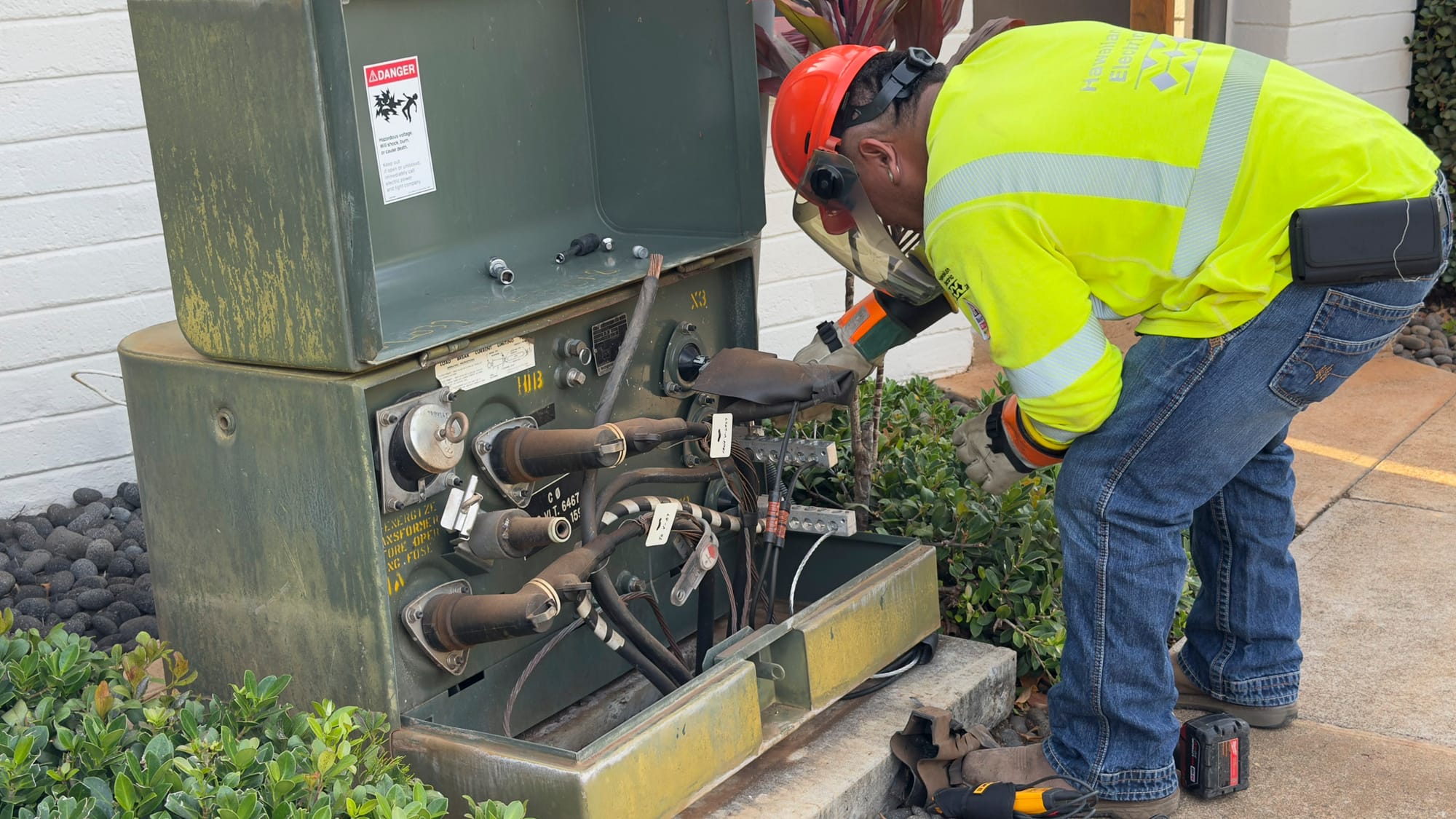
I knew it would be like this. So there was little disappointment. But it was a lot of work, bit by bit.
The rest of the family settled in, too. School, work, surf, friends and community—the irreplaceable things we had missed over the year abroad—were finally ours again. I joined a local woodworking club called Kapuna Shed, where I could hang out with other old builders, and learn how to do all the things I knew nothing about, like CNC, laser cutting, and sanding.
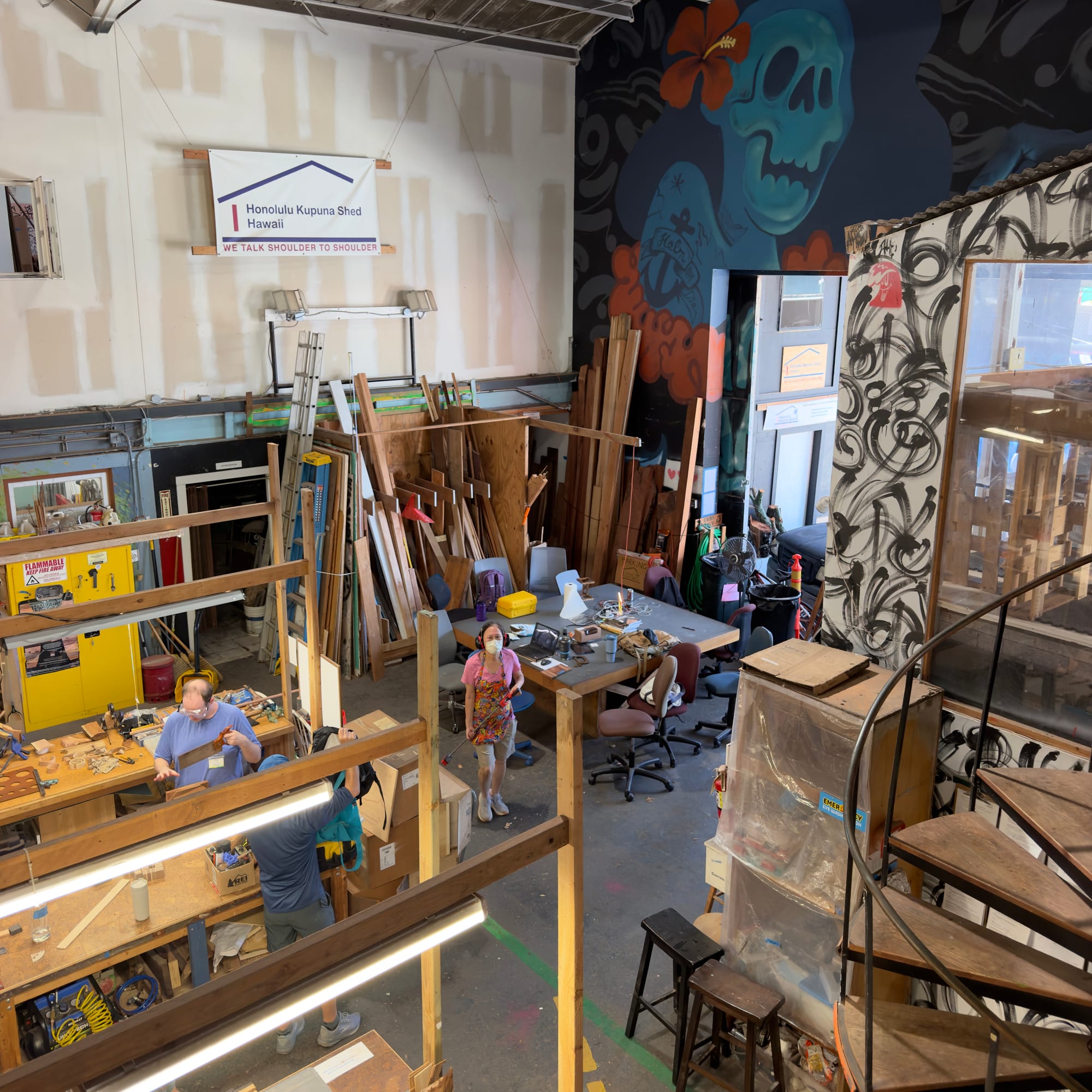
It was clear that serving places like schools, non profits like this one, and historic homes was the path forward, rather than deal with clients.
I hired two young architecture school grads who also do woodwork to help me in the shop one or two days a week, Zane and Beau.
Zane has the innate sense to find any clutter in the shop and eliminate it. I started selling tools on a regular basis, including this lathe that I never got around to using, to make way for new machines.
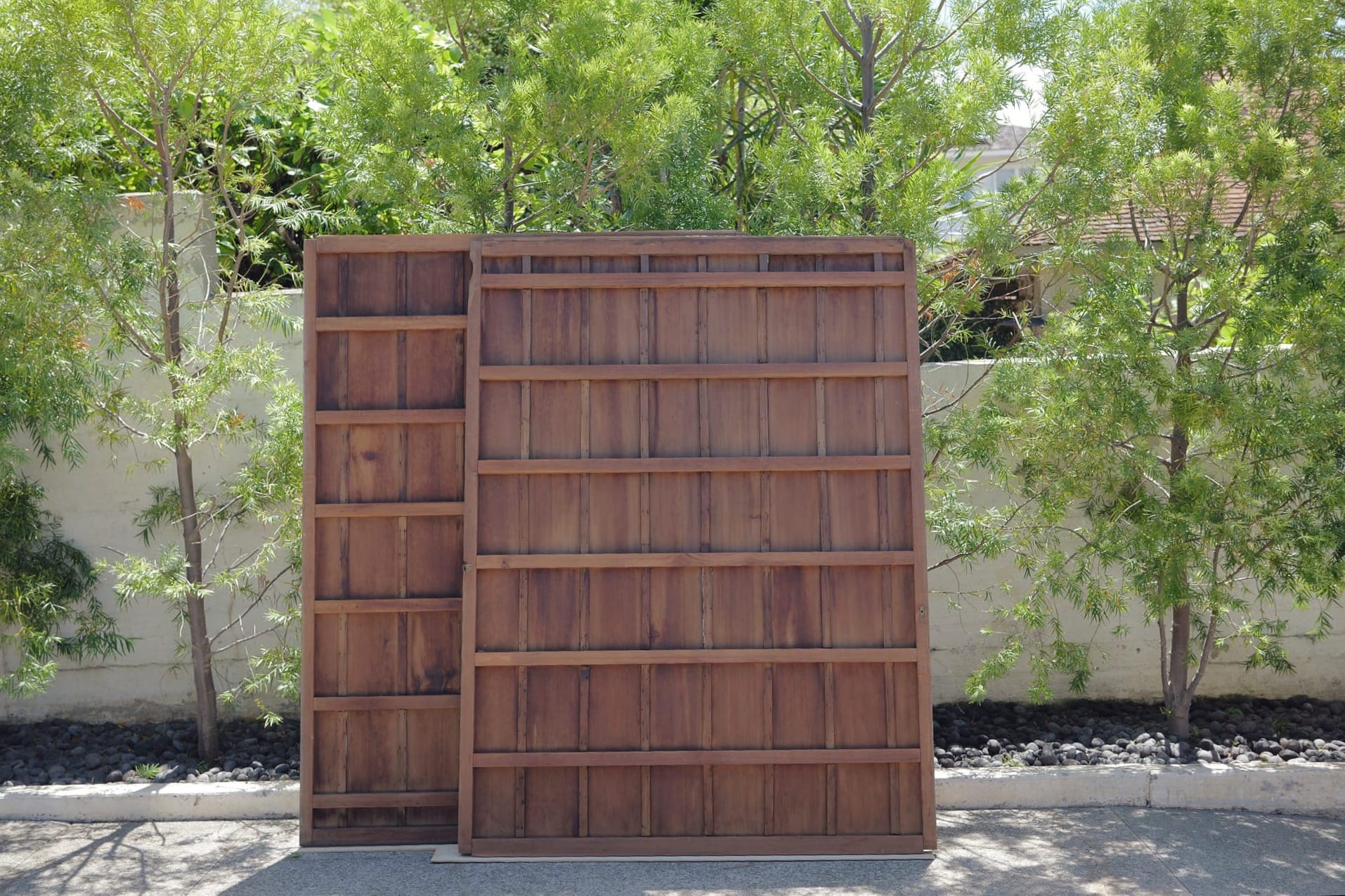
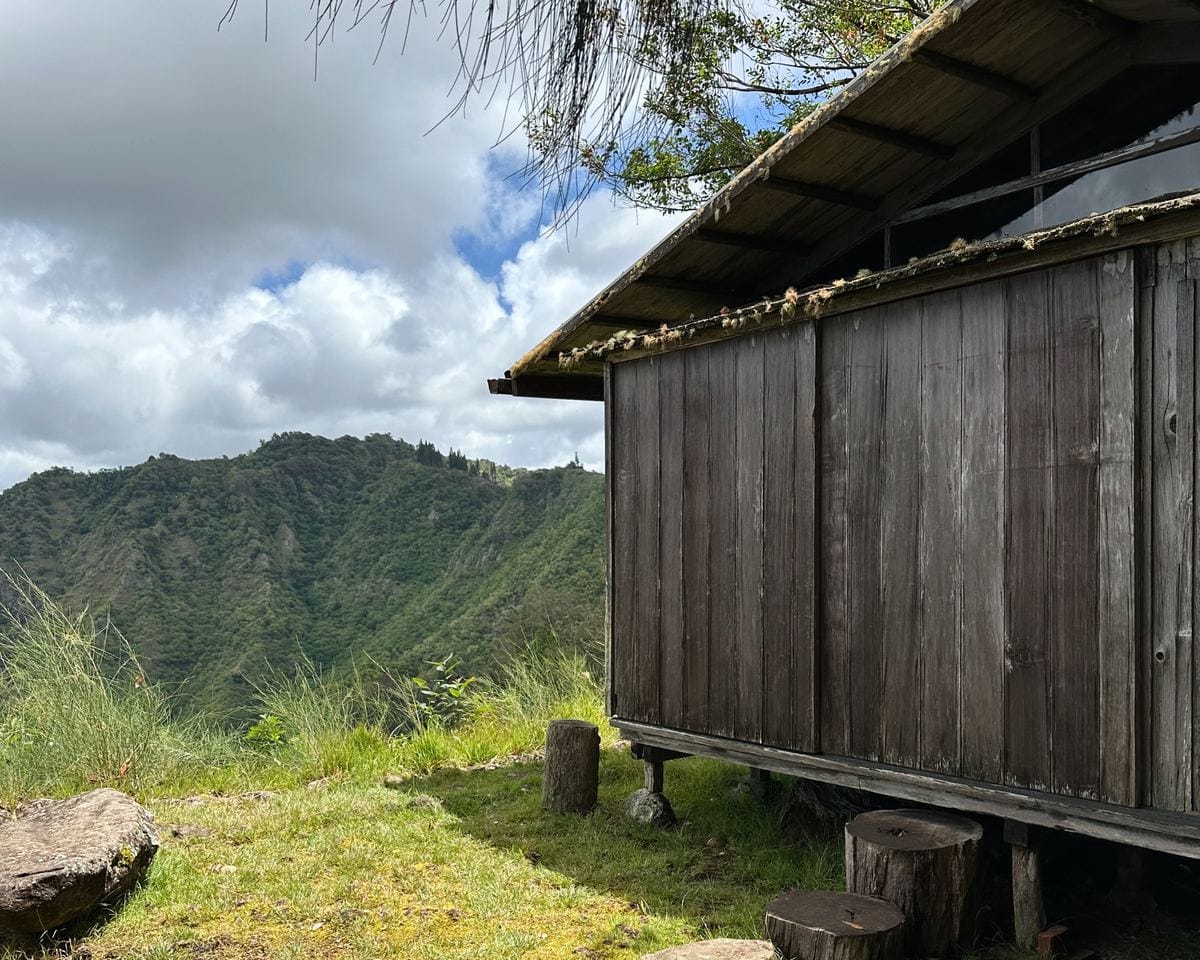
While hurricanes swirled around the islands, we sprinted out some improvements to the amado (storm doors) for the Ossipoff cabin. The home was built by the most famous midcentury architect on the island, by himself.
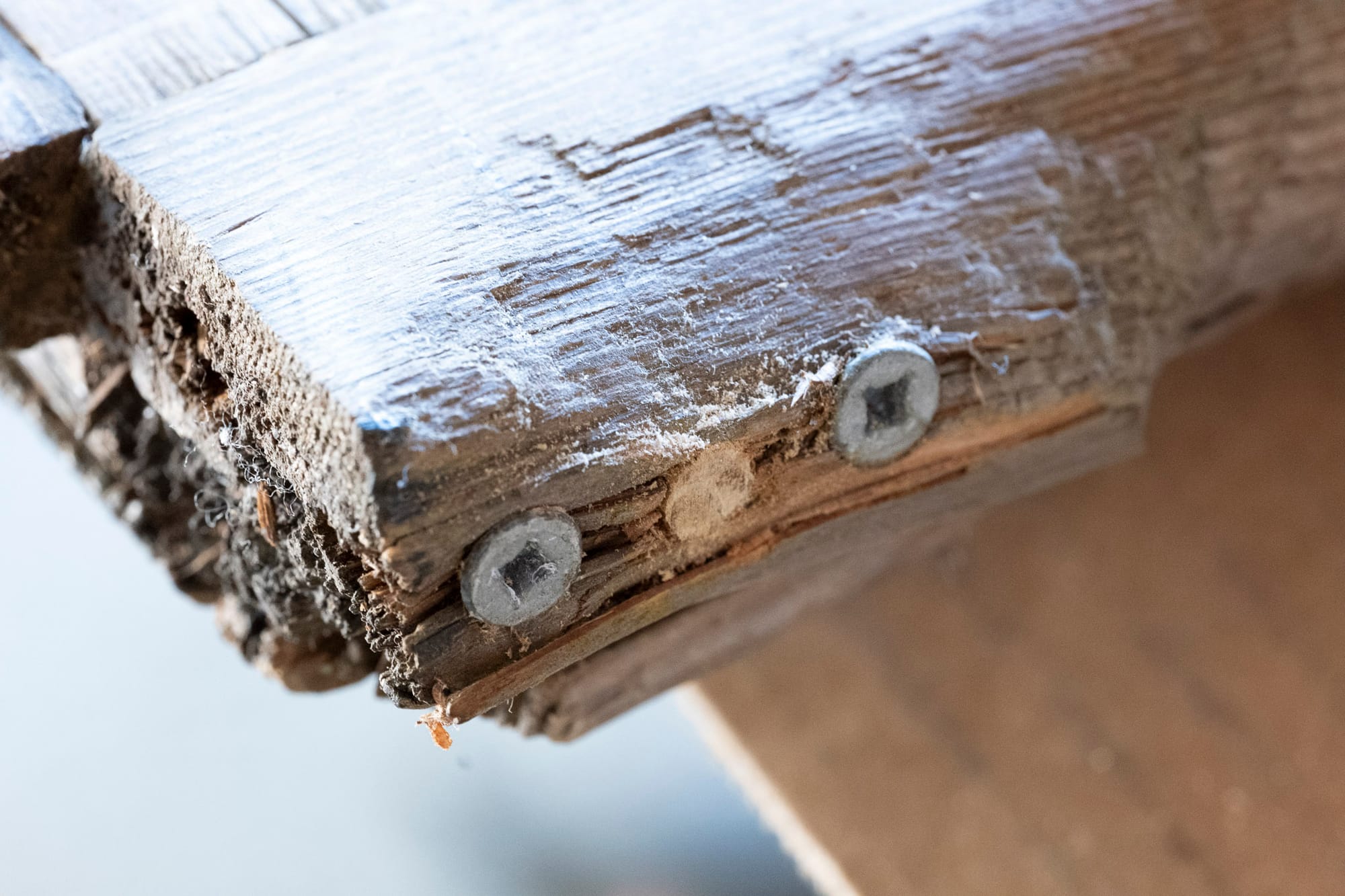
And the doors were on the brink of death. They were suffering greatly in completely avoidable ways if they were built more traditionally. I was shocked at their peculiar construction, with only nails and screws, and a thin bottom rail that racked under its own weight. The thin, nailed quartersawn panels were splitting everywhere.
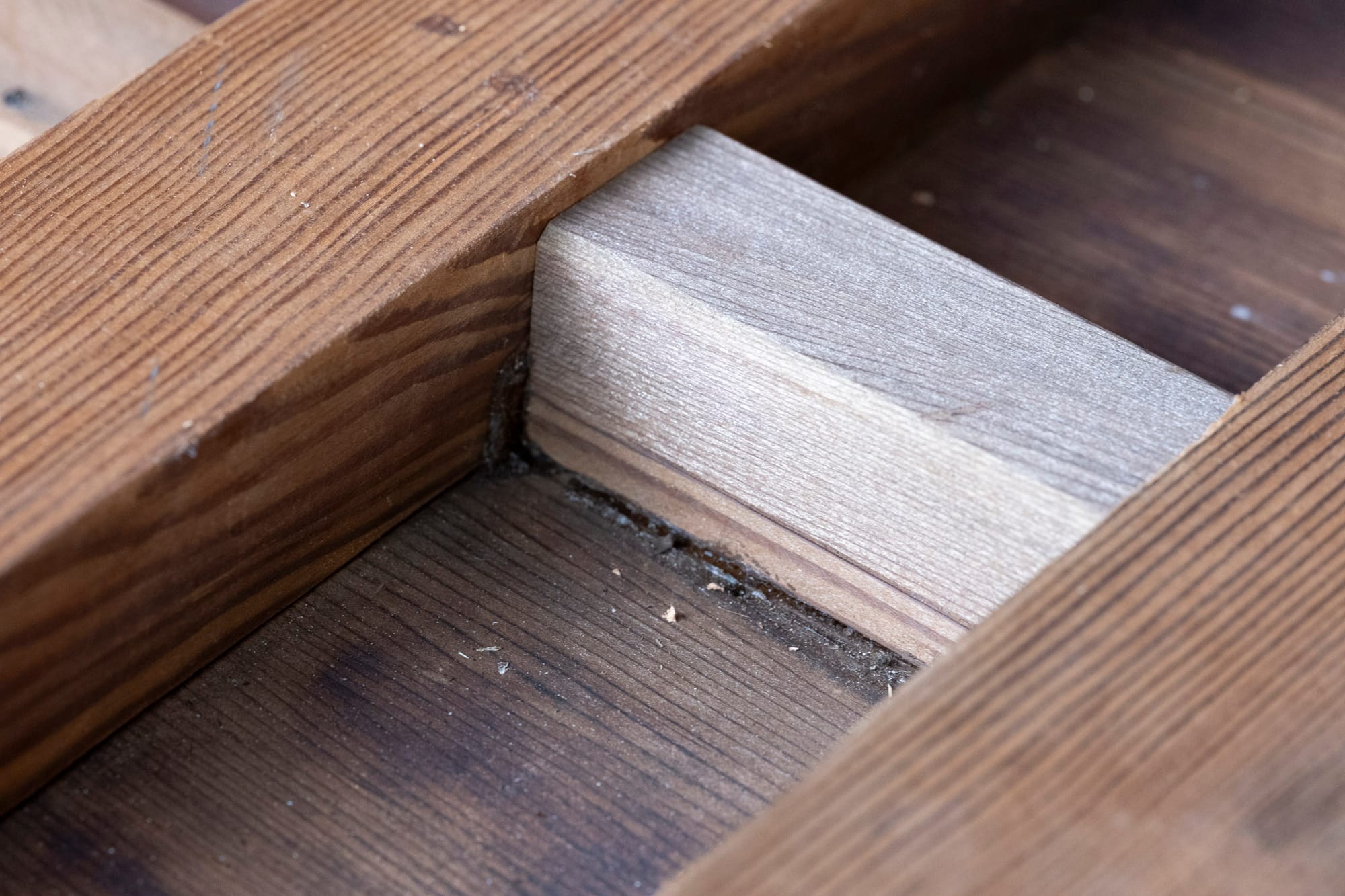
I bristled at the design. But they had lasted 50 years, living under a generous eave, so really, who could complain?
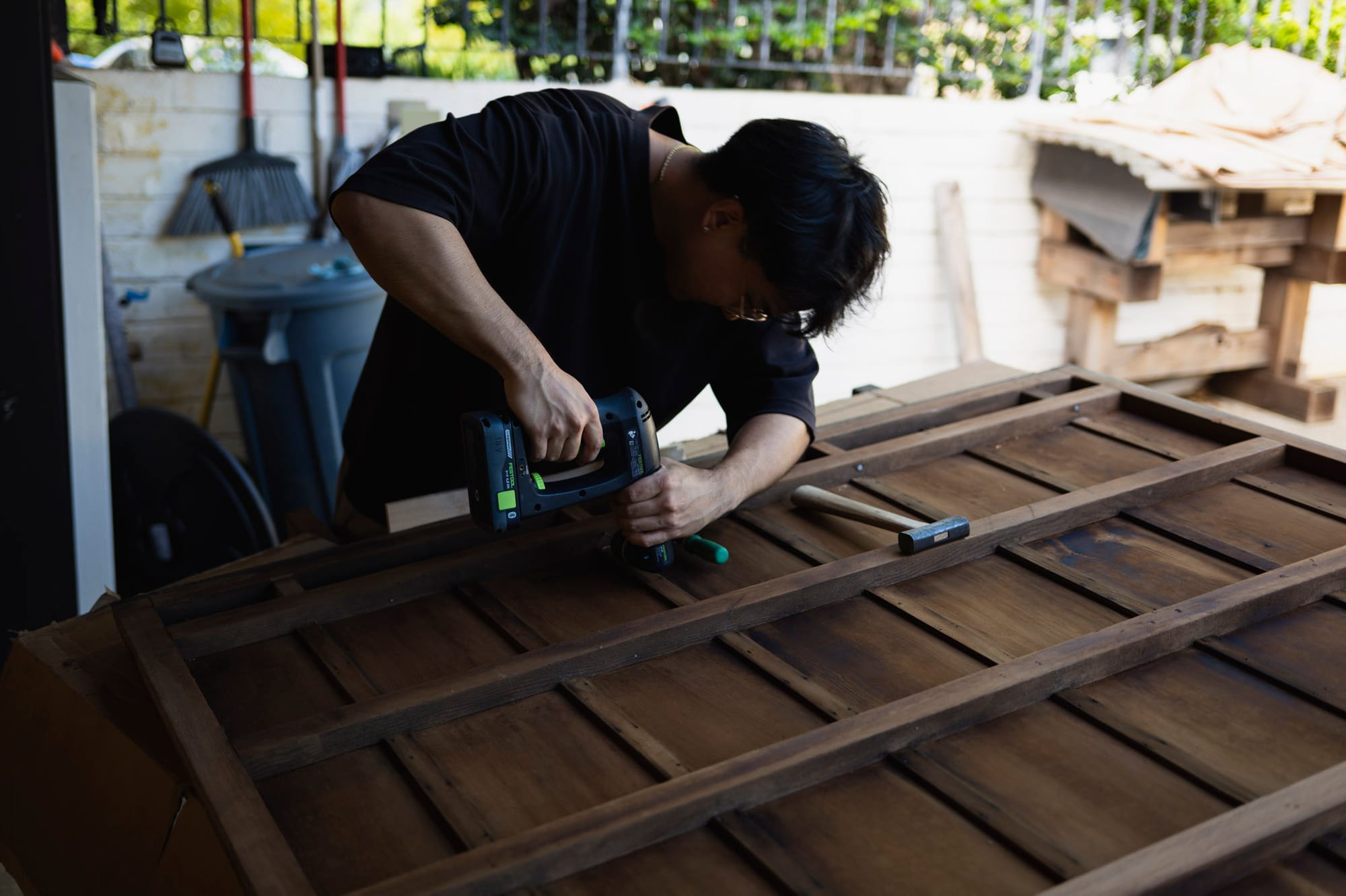
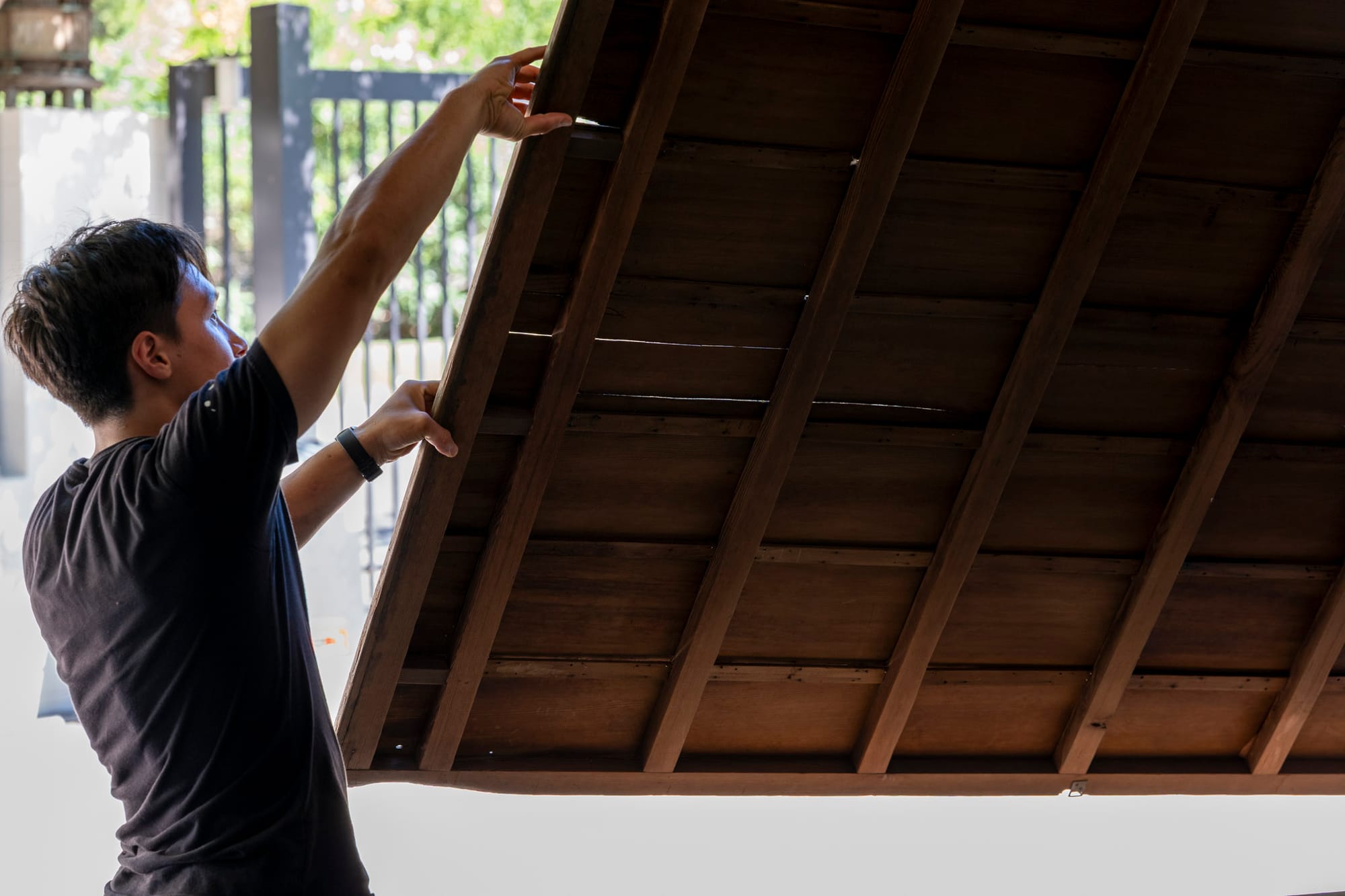
We replaced the bottom rail's nails with teak dowels and made small posts to connect the bottom two rails for extra support against racking. And used silicone carbide nails with ring shanks (but traditional boat builder heads) to refasten the boards to the frame. The initial assessment from the architects involved a complete rebuild, but all the wood had a beautiful dignity, so replacing it with fast growth modern material was unthinkable while the original historic doors could still be saved.
It's the season where new projects are budding. Ziggy, at Year of Mud, just announced his 15th year of hosting workshops. Somakosha's 2027 class spots are already going fast. And Jonny's new book on kumiko is coming out in a few days.