An abridged version of my talk at the Port Townsend Japanese Woodworking Festival.
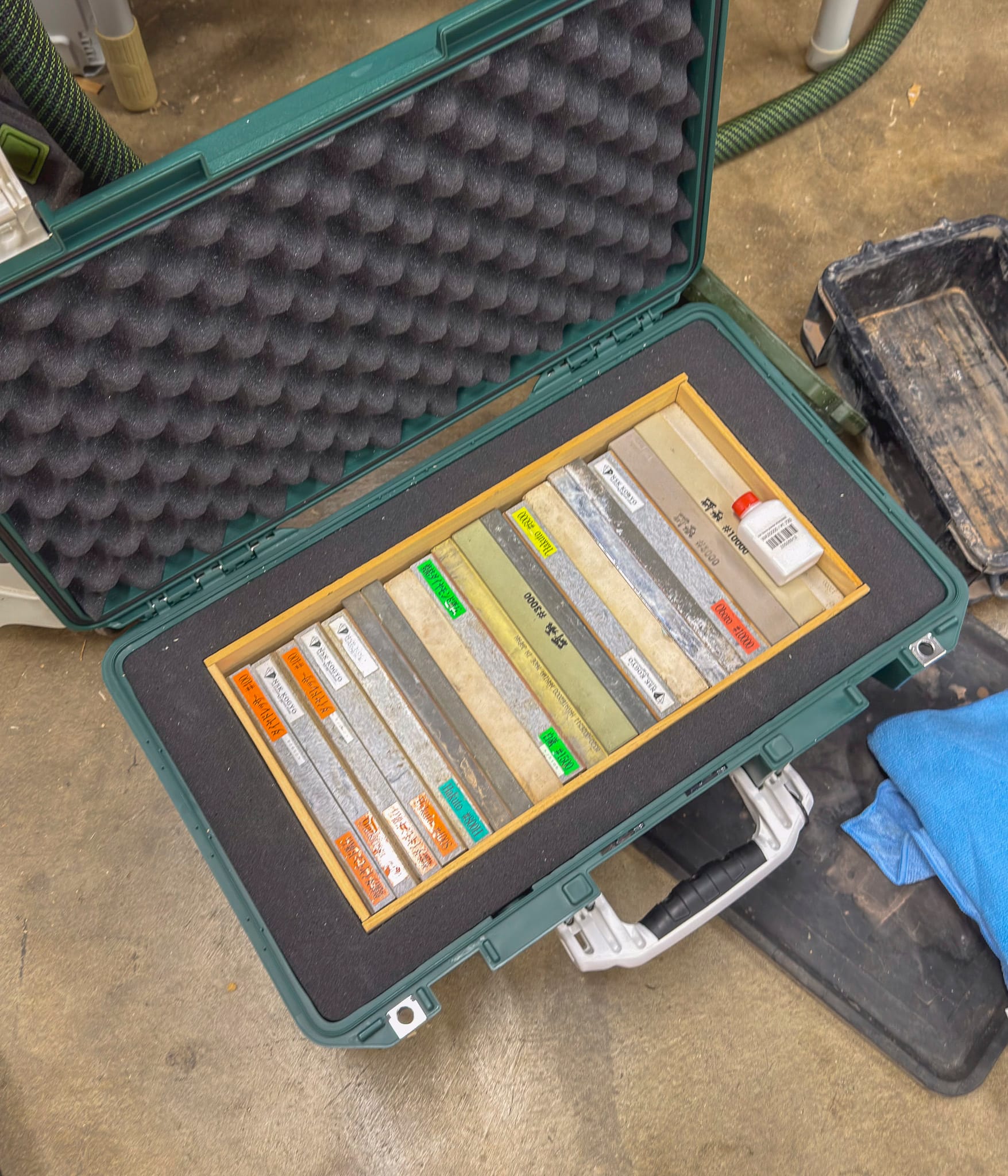
I thought someone had stolen my sharpening stones. It was my first flight after moving back to America from Japan. In Sea-tac airport, a locked Pelican case triggered a security protocol isolating my case in a holding area, assuming it was a firearm.
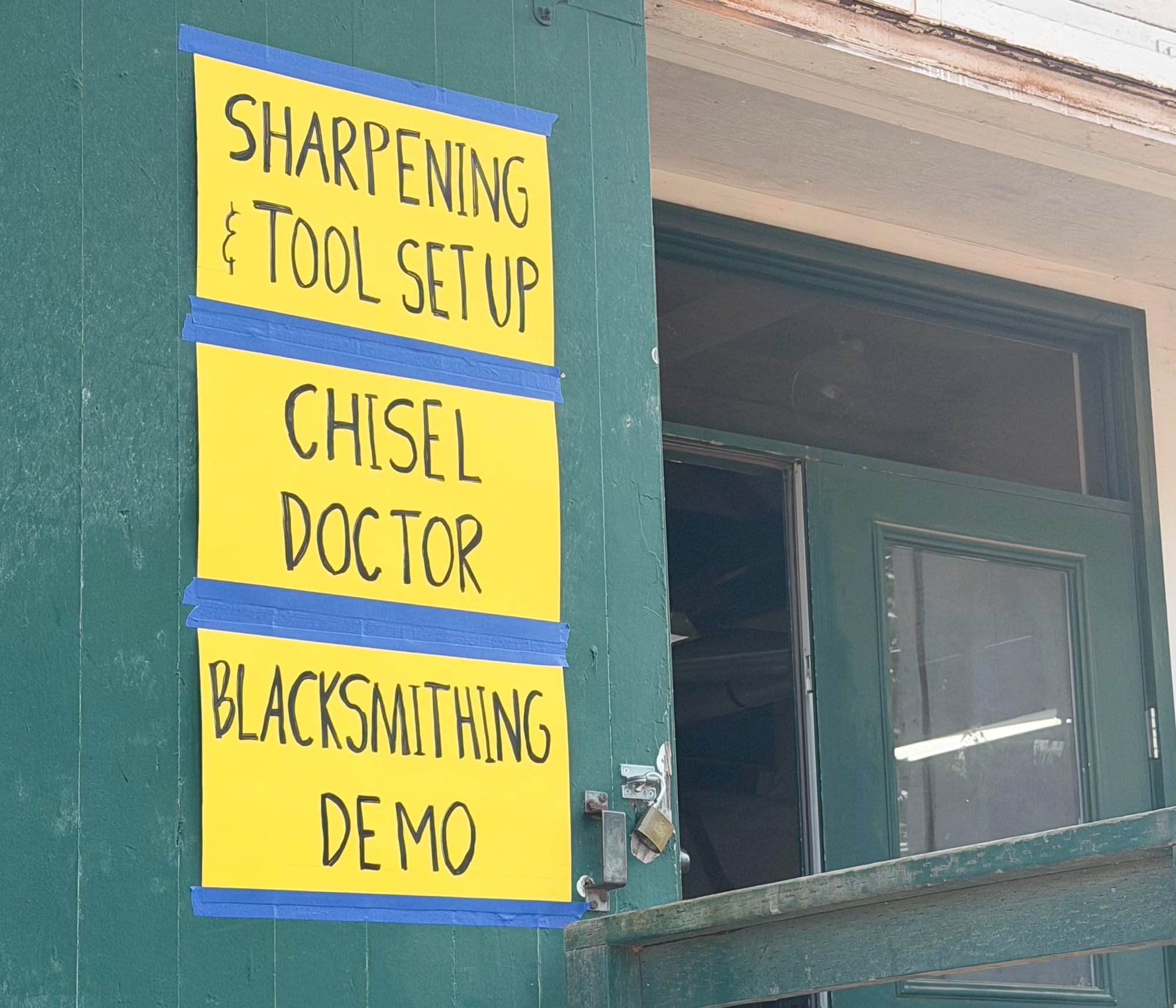
It would be my first time back to the Port Townsend School of Woodworking since I took Dale Brotherton's class a few years ago. This time, I would be giving a talk about my year at Somakosha, and demonstrating some sharpening.
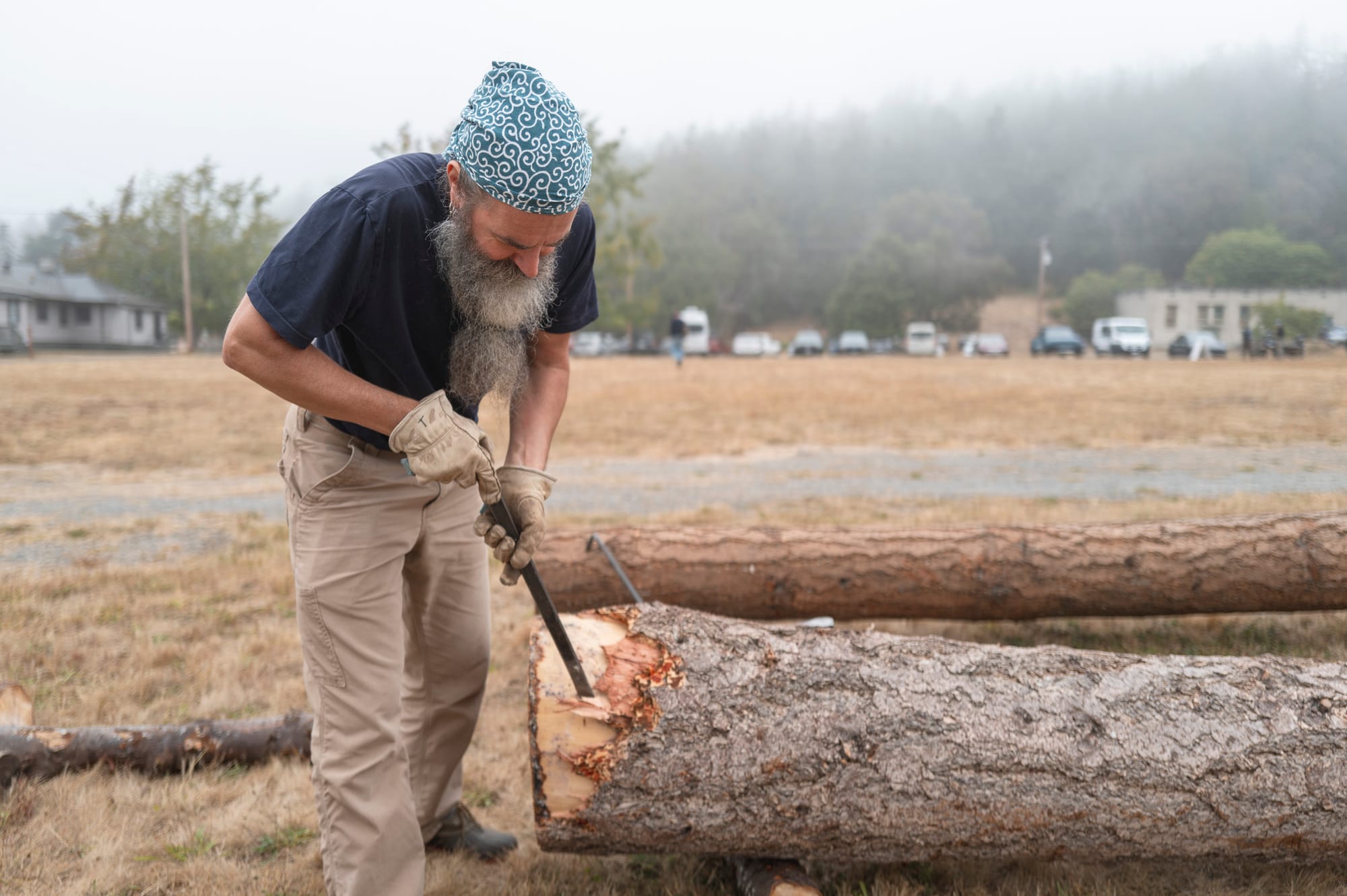
My teachers and friends were also doing demonstrations, more than half of them having come through the lineage of Dale of the Takumi Company, via Yann of Mokuchi, which ultimately leads back through Dale's teacher Mokoto Imai, a sukiya carpenter from Japan.
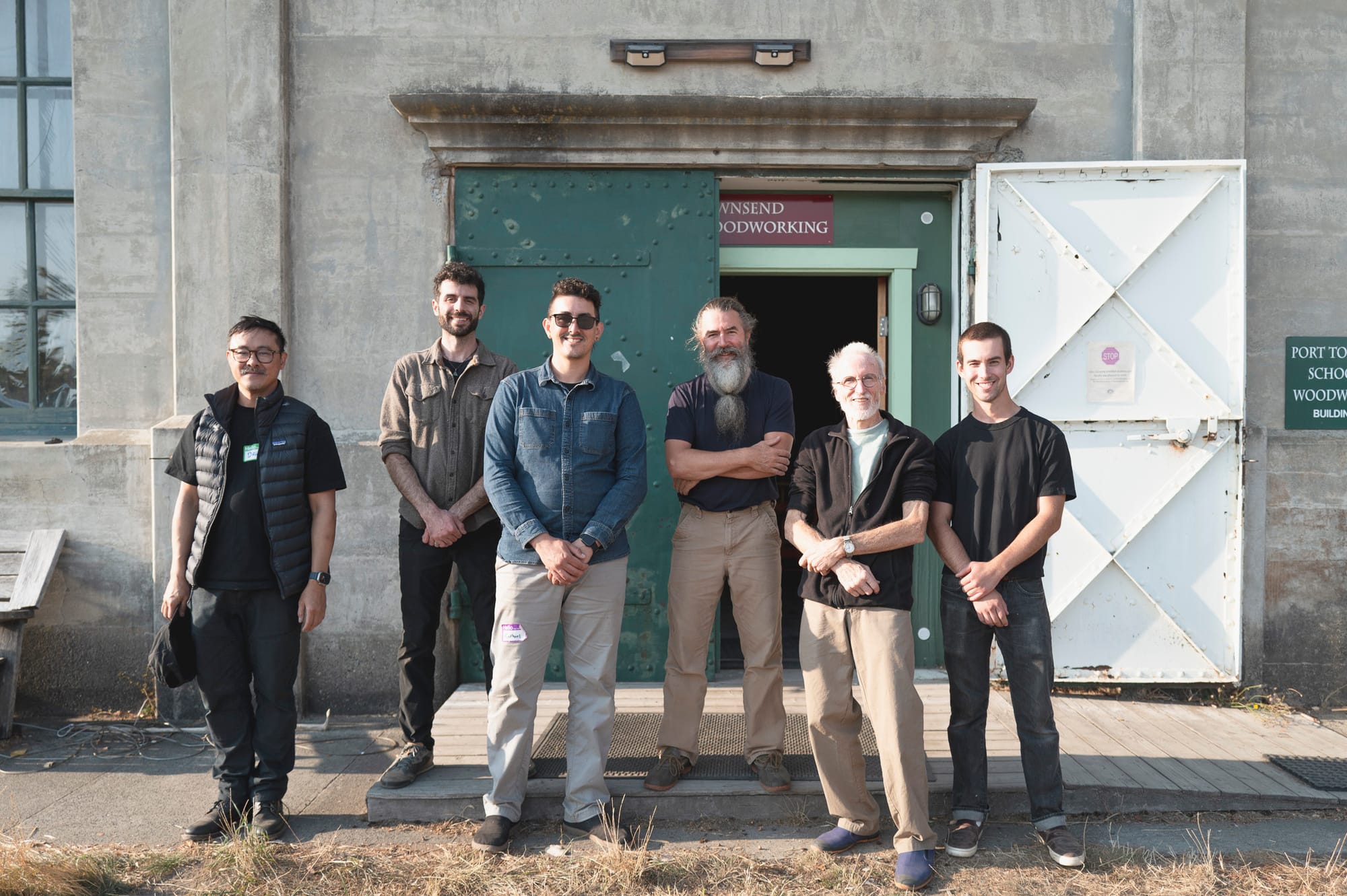
Seeing that lineage of carpenters extend to people who are carpenters, like Dale's apprentice Jesse, is rewarding. A few of us are educators as well, including Johnny Tromboukis, whose book on kumiko is coming out. Or Raphael Berrios, teaching at Port Townsend School of Woodworking. All of us are working hard to perpetuate craft. Not just in things made of wood. But as a modern antidote for what is pushed down onto our minds and spirit, via our credit cards and screens.
Karl Bareis and Jon Billing were also in attendance, telling stories and sharing their decades of hard won skills.
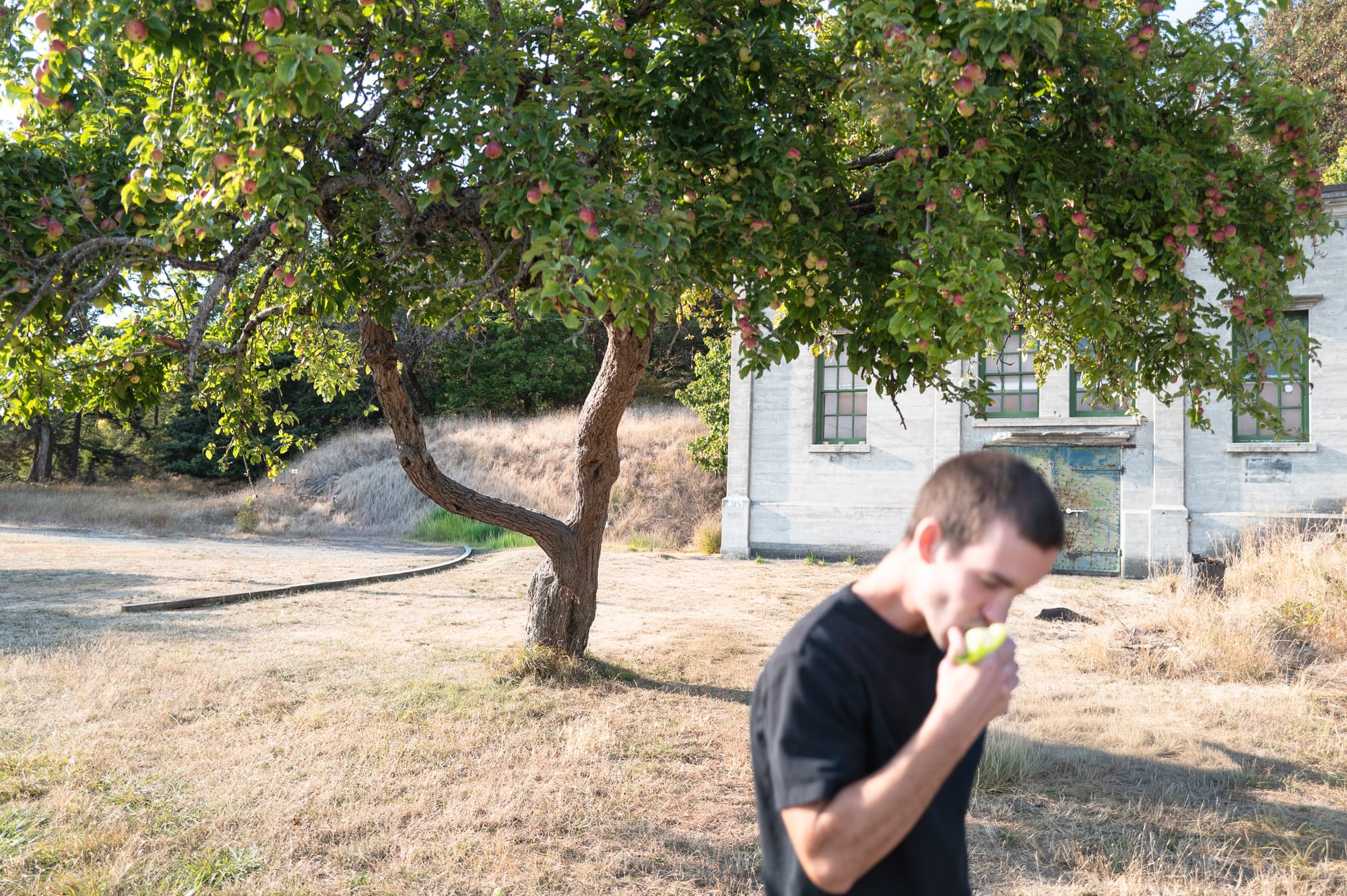
Whether we acknowledge it or not, when you're taught something in this culture, you have a responsibility to make sure it doesn't die with you. Being here at this festival—the only one open to the public for free, so far—is part of that responsibility.
This event's sponsorship by the school led to many new faces in the audience. Hopefully, more than a few of them become craftspeople themselves from their exposure at the event.
Here's an abridged version of my talk at the Festival, in case you're interested. The slide show was just hundreds of photographs taken over the year, many of which you can find in the newsletter archives.

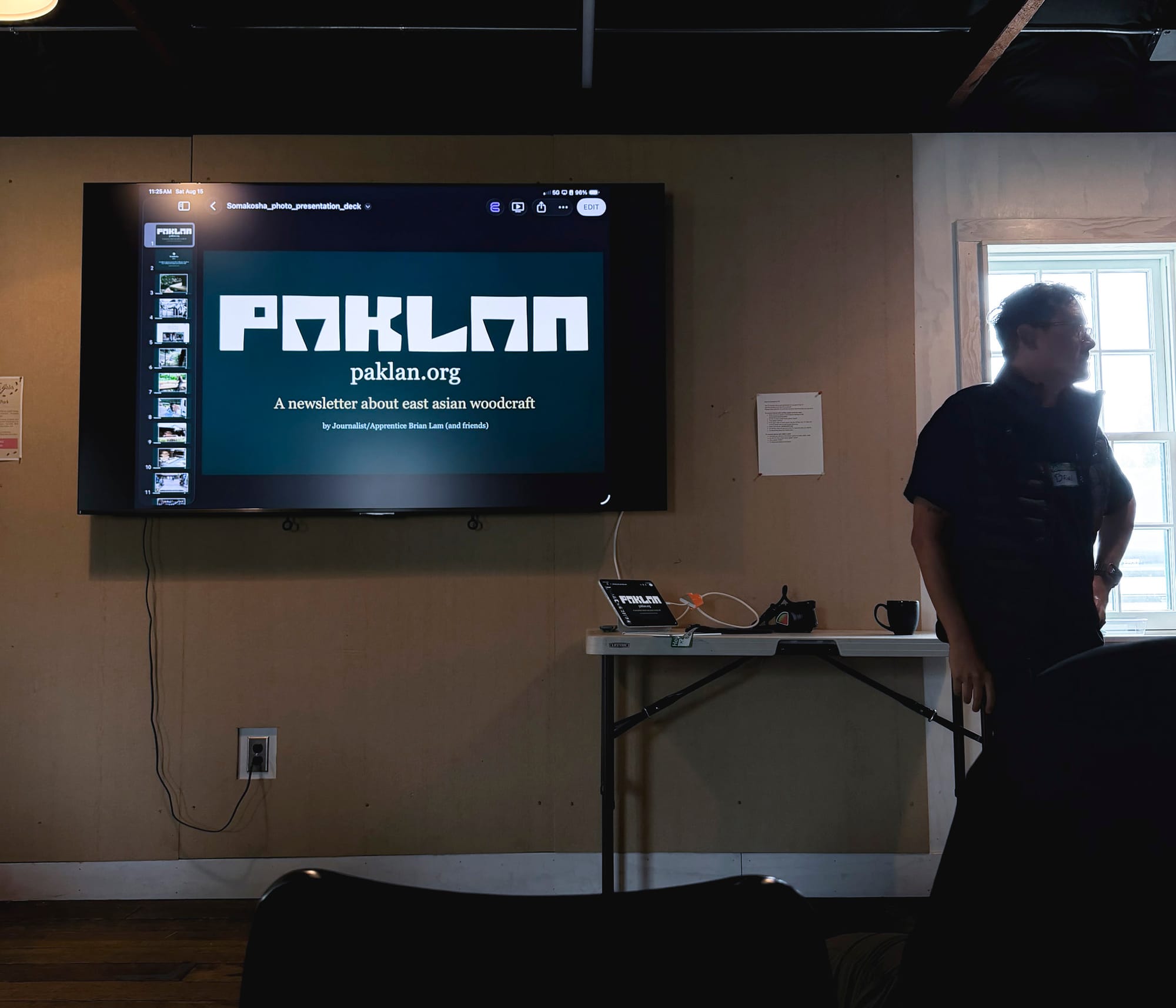
Begin
I just lived in Japan for a year, so we'll start this talk right on time.
Please raise your hand if you're a craftsperson? I'm trying to get to know this audience, because I didn't prepare a talk. My name's Brian Lam, and I haven’t met most of you, which is great; usually at these things I know everyone in the crowd. But you're here to see what it's like in the meat grinder of an apprenticeship in Japan. A bonus is that I'm 49, twice as old as the other apprentices, so when it came time to pick up a log I was often not able to. I had a very strange apprenticeship, but I was able to observe things.
The camera
I have a journalism background, having written for places like the NYTimes, New Yorker, Wired, etc. So when I got the offer, I decided this is a bad idea — but the kind of bad idea you can't say no to. I told them, "I'm going to be fairly useless, but I'm a pretty experienced journalist. And I don't see any photos of you guys working. Why don't you let me shoot at work?" They said yes, which is an even more rare opportunity than the apprenticeship itself.
I've been in this community about nine years. The first time I took a class with Yann Giguere, who is hewing just outside. I told him, "I think something important just happened in my life" — the first time I cut a joint. Then I said, "But you might get bored of this in six months." I know myself. Sometimes you just get bored of things. But here we are.
Eventually I ran out of classes to take. I was pushing people like Yann — "Would you ever do a class on this thing I want to learn?" If I wasn't going to become a professional, I was going to run out of things to learn, and that made me a little sad.
I thought it would be a good scam to use journalism to watch people in their workshops for days or weeks at a time. Who else is going to let someone stand around while they work? Craftspeople are going to say, "What are you doing, just standing there watching?"
Jon, Yama, and Somakosha
It started with a New York Times article I wrote about Jon Stollenmeyer. Jon is a crazy American who stood outside the most heralded sukiya teahouse carpentry firm in Kyoto — by that measure, the world — for months, until they stopped telling him to go away and gave him a job. He's the only American who's ever apprenticed there. Carl Bareis, who just spoke, mentioned Ise; the teahouse there is a building Jon's boss's father made, and one they don't take apart, because the wood and the talent aren't something they want to re-approach regularly.
Jon is now a partner at Somakosha, where I apprenticed. One of the phrases they throw around is "tradition is now." Yamamoto Kohei worked for Ogino-san, one of the few people in Japan licensed to work on any historic building of any magnitude. So you have an American, a Japanese person, a sukiya carpenter, someone out of temples and shrines. They are known for building in the ishibatate style, post-and-stone, and are featured in a textbook on hewing. It's traditional, but it is also a radical place to work.
Saying yes
Apprenticeships are designed to take someone who has nothing, and the less you have in the way of attachments, the further it'll take you. I was going through a separation. Two houses in Hawaii. I've got a kid.
So my answer was to say to my ex — it was mutual — "Why don't you and Charlie, my daughter, come to Japan for a year?" Right when we signed the separation papers. It's kind of psycho. I just said, let's do this.
I told Jon and Yama I had to be clear: I don't want to be a carpenter. It's a lot of heavy stuff, and it takes a long time to build a house. I didn't have that kind of time, and our home and our friends are in Hawaii. I'll come out for a year and document it all, but I'm not taking this all the way like your other apprentices. I want to cut. But, you should kind of ignore me. They said, sure. We'd known each awhile in the community so we trusted it would be ok.
Last August, after my final three classes — hopefully not my final ever — we moved to Okayama. After culling every day, I shot about 20,000 acceptable photos, so I'm still sorting.
The first day
I showed up ready to clean toilets and haul garbage. I didn't even bring most of my tools that day. But Jon put me on a project immediately — a gate for a knife shop in Osaka.
So I start cutting. Confident. Going great. Then he says, "Okay, shoulders for these tenons — split that line with a circular saw." You don't learn that in classes, because schools can't hand power tools like that to students.
It's a new saw I bought for this job. Square, square, square, take the cut — two degrees out. That's a lot. I adjust it 20 times, losing my mind, and finally realize that at full extension the plastic collar is hitting the workpiece and kicking the blade out. So I chisel the plastic out of a brand-new saw.
Everyone's been working 40 minutes while I'm messing with my tools, which you're not supposed to do. I make the cut and it's perfect. I'm ready to move on. Clark, who's been doing this a while and is very sensitive, says from across the shop, "Oh, that looks kind of weird."
I had cut the tenon off. I cut the wrong line perfectly.
I was surprised but nobody got mad. Everyone assumes you'll do that in the first couple of weeks, from nerves. Doesn't matter how good you are. Mistakes are not dwelled on, but its expected that you make it right and take responsibility immediately and move on.
There is such a thing as too tight
In America you can't help getting mystified by Japanese woodworking, and the bias you carry in is that everything is perfect and super tight. I struggled with that all year — approaching the work like a machinist or a sashimono maker, when carpentry tolerance at its best is maybe 0.3 mm [0.012 in.], one rin. You need that looseness. Frames don’t go together once the collective friction of many tenons into a beam add up, factoring in their varying errors interfering with each other.
Stylistically, and in terms of energy efficiency and speed, looseness is prized. You ever watch Miles Davis play trumpet? He's just kind of doing it. He's not thinking about it too much.
[Points at screen] That's one of my joints. Took me forever, but it's perfect — everyone else did three in the time I did one. I needed it for Instagram and for this presentation, so it serves its purpose. [A JOKE]
The screws on the floor
There's a good story about tightness from one teacher’s old firm.
There was a very good client, jobs over and over again. Three times he asked whether his son could apprentice. The son is a math or engineering graduate from a famous University, very left-brained, and he finally got in. I think other apprentices were in charge of watching out for him.
They walk into a room they're restoring, and the ceiling is gone — a problem, because the ceiling wasn't in the scope. When asked, something about it had bothered the son enough that he took it out on his own.
Then one day they're due for tea with the boss's wife, which is not something you're late for. They come to get him and he's sitting on the floor surrounded by screws. He'd found one wrong screw in a drawer and thought, what if there are others? So he pulled the whole wall of screws down, and dumped them all on the floor and started sorting. They dragged him out kicking and screaming to tea, screws still everywhere.
That's the best example of: you've got to get your work done. You've got to stop sharpening. This work is so beautiful and utopian that people go perfect, perfect, perfect and get lost in the preparation — tool collecting, myself included, or fussing with stones. But when you get to Japan, or you're working here for someone, you still have to do something.
So, what are we building with all this?
Cleaning
In some way, I feel robbed, because I wasn't allowed to clean toilets.
I met a talented builder out of France at another school. He wanted an apprenticeship and had an interview. But when he found out how much cleaning was involved, he said, "I can't go all the way from France to Japan just to clean."
People think it's hazing. But Shinya told me his grandfather said: you can teach a carpenter everything they need technically in three years — but if you want them to be really good, you have them clean for three years first. Jon put it this way: you clean, you're bored out of your mind, you get good at cleaning, and then you start noticing things you didn't notice before.
Woodworking is a reductive craft anyway. Making a mortise or a tenon is just cleaning away what you don't want, like sculpture. And it doesn't matter that you're not doing the hardest part of the project. It feels good to be part of something.
Nights and weekends
People want an apprenticeship because they think it'll be cheaper than classes, or faster. They're so wrong.
I was parenting from 3 p.m. on, so I missed the critical hours. During the day you're mostly assisting. Nights and weekends are when you develop your tools, get better at sharpening, practice joinery.
Without that time I had to survive on the skills I brought in from classes, and that's when I understood what classes are worth. There's a guy at the shop eight years in, doing layout on full-sized frames, leading. I watched Yama-san give him a quick lesson to improve his sawing — hold your hand lower on the handle, the geometry is more accurate — and it was a section of a class I'd taken years ago from Yama and Yann. That's a man 11 years into the work, counting his apprenticeship, hearing a reminder of what you get in the first week of a class here.
At Somakosha we say they're teaching people to teach themselves. Carpentry isn't controlled the way a furniture maker controls every element. Things move in the sun, in the rain, and as the wood dries. There is no formula, you have to adjust and problem solve in every situation, which is unique. So you have to learn how to learn, largely on your own. Self study is a big part of the culture.
So what's the point?
People want an apprenticeship because they're interested in hand tools. But on a restoration with a lot of demolition, cutting is maybe 10% of the work.
One apprentice is a SpaceX mechanical engineer intern from Purdue who decided to switch it up. Speaks Japanese. They asked him to get his commercial driver's license — they kept raising the bar. And he made it through. He's the only apprentice who came in with no woodworking experience, so for nine months he didn't cut at all. He hauled garbage, demolished concrete, and sorted: metal, glass, concrete, wood, nails pulled, sawdust, superfine sawdust, electrical, lights. In Japan garbage sorting is very serious, even though a lot of it gets incinerated together anyway.
So why do it? You're never going to learn to build a house in a class. But he got a front row seat to how to take apart a building, and that informs you on what a building is made of.
Would you pay to take a class on putting insulation above or below a roof? There's too much; trades, electricians, plumbers, HVAC, foundations, stormwater. Carpentry carries responsibilities that in the West get handed to a contractor or an architect. That's why you do it.
Why I started the newsletter
Enough people have put time into teaching me that I'm holding a bag of information that isn't online. What is online is 99% misguided or without context. That's why I started a newsletter about East Asian woodworking — it's crazy that all our publications are Eurocentric.
I've trained in Tokyo-style sashimono at Mount Fuji Wood Culture Society, and here. This school (PT School of Woodworking) is doing an amazing job of going global — Noh mask carving, Dale being here, Jon Billing being here now. I'm trying to push into China, so if anyone has leads on Chinese furniture, find me. I could contribute in a lot of ways, but since I'm a journalist, this is my way.
Once you are taught something, you start to realize there’s no way to pay your teachers back. The only way is to pass it forward, and to make sure you’re not the one who is breaking a multi generational line of knowledge.
These are some of my findings from spending a year at Somakosha. It was an honor.
Q&A
How did you handle housing and tools?
I moved out with four people, two apartments. My fiancée has lived in Japan for 11 years, and without her we wouldn't have gotten apartments — I'd have come back after three months. Logistics in Japan are hard, and I don't like rules.
Usually you just show up. Monks and apprentices are trained similarly in some ways, which makes sense, because this work came through the peninsula with Buddhism. You arrive with nothing and get housing or a housing fee, and food money. Anything after that is for tools.
That's the real commitment. It isn't only years of your time — it's several years of salary toward a tool set where if you don’t have the tools, you cant really do the work.
I've been obsessed with equipment since Wirecutter, and my tools are ok. One day I had to set up a rabbet plane for work and asked permission to do it on the clock. It was a keizaburo, so the back was already flat, and I set that kiwa-ganna up in 40 minutes start to finish. It takes some people a week. I survived there because my tools were dialed in, and that's a testament to the classes. It's why we point people toward the school, and why Somakosha started one: they couldn't train as many people as they wanted until now.
Were there many female apprentices?
Yoko has more certifications than almost anybody but the bosses. She's wanted to be a carpenter her whole life, but nobody would take her until Somakosha gave her a job. It was sexism, and then it went on long enough to become ageism. Imagine getting every certification and still not being given a chance, for decades.
She's incredible. She spent a year traveling through Australia visiting her favorite architect's work, and she speaks English, so she's a vital part of the school now. That story needs telling, because it's the same reason I got in: Somakosha will look at a weirdo like me, or someone like Yoko, or the foreign apprentices, and give them the time of day. That's extremely rare.
How do you feel about how Americans are taking it up?
You're asking the right person, because I'll tell you straight, and most people are too polite. All this came from China. I'm Chinese American, so I like this. People in Japan will say, this came from China, we don't even understand how they did it — and then they made it their own.
That's happening in America now. People are using tatami proportions on the floor and Western proportions on the height, so things look less squat and people bang their heads less. Some of it looks like it might fall over. That's okay. People are very tall here and they've got to avoid a concussion.
When I first got into this community, someone told me you don't put a grinder to a kanna blade because you don't want to offend the spirit in the blade.
[Audience member: It's straight-up Orientalism.]
I didn't want to be captured like that [lost in traditional rules]. Jon and Yama are radical — whatever it takes — because another idea there is that there's no such thing as a good slow craftsman. All work considered equal, a fast craftsperson making the same product builds value for their family, their company, and their client, and can spend what they save going deeper on the finish work. Tradition is now.
Watching Jon cut those posts changed how I think. He trued up a beam, built two centers — basically a fourth axis on a CNC — locked them at 90 degrees, and made a sled he could drop a circular saw or a groover into. He'd knock out a door jamb that takes a long time with a chisel, bevel down.
So I'm in love with machines, and thinking more about CNC. You would not guess the rent on 8,000 square feet there, or what the carpenters pay. They have healthcare. One of those perfect doors in super-tight sugi is $40 of wood, maybe $30. And they still use every machine they can. Meanwhile you still need to scribe a sukiya piece without LIDAR and a robot arm.
I've also come around to Americans doing it their own way. I made a friend online who's building a frame in the Pacific Northwest with no training. That used to bother me. Now I love it — the passion, the courage. It's not half bad. It's quite beautiful. After a while you realize everyone is just trying to do the best work as fast as they can, and that's what's respected. You have to be fast, loose, and do beautiful work.
Do they use routers and router jigs to rough out mortises?
Whatever's fast. Nobody tells you how to do it. One time one apprentice was using a groover upside down on a jamb that was already installed, chips going straight into his mouth. Great photo. Jon and Yama's reaction was just a curious wondering why didn't he do that before installing them? Not "don't do that, we do it this way." It's his choice as a carpenter.
Sharpening is the same. Some people I've talked to here spend a quarter of their workday on it. There it's under 2% at Somakosha. Sometimes it's not as clean — you can't do that for finishing work — but for mortising and clearing waste, you can.
If you want to do this
If anyone wants an apprenticeship, talk to me. I'll try to talk you out of it. But if you can be talked out of it, how badly did you want it? Everyone tried to talk me out of mine, and then the moment they heard I was going, it flipped. I told Dale my back already hurt just thinking about it, and he said, "Don't think about it too much. You'll be okay." He'd been the one telling me how hard it is and that people should start younger. As soon as you've decided, it's full support. That's part of the gauntlet.
Don't worry too much about things
These are the best photos of Somakosha working, because no one else showed up. That's my game: go where no one else goes.
I was lucky enough to take a workshop with my favorite photographer, Greg Girard, who got on a boat to Hong Kong at 18 out of Vancouver and then lived in Tokyo, Hong Kong, and Shanghai, shooting for decades. Greg looked at my photos and was trying to understand what I was focused on. I told him this is what I look at when I'm trying to learn carpentry. This is the eye of an apprentice stealing knowledge. I took most of these because there's a secret in them. A master carpenter in Germany asked why there were screws in the side of that fence — those keep things plumb while we scribe the stones, and the holes get covered by plaster. A very good question by a master in his own field, noticing little things. That's what it's all about. Study any photo of my bosses working, and you will find something to learn.
The newsletter is comprised of narratives, and I try to keep it approachable, like this festival, where someone who isn't a craftsman should still get something out of it. There's service in it too: flattening stones with three stones gets you far flatter than a diamond plate. I'm doing a series on modern cutting techniques, which is like taking acoustic guitar and jumping to electric guitar. And I want to run more translated excerpts of Chinese and Japanese books. A lot is free, but subscribe for a year, and I can almost guarantee you'll get better at cutting and sharpening as an amateur.
Keep in touch — I'd love to hear what everyone's doing.
Subscribe